Research Areas
ARCHIMEDES is a research unit engaging scientists from leading Greek and international institutions on research in Artificial Intelligence and its supporting disciplines, including Algorithms, Statistics, Learning Theory, and Game Theory. We place emphasis on the mathematical, algorithmic and conceptual foundations of these fields, and we target several application domains. Find out more about our (still expanding) list of research areas below.

AI for Law and FinTech
The aim of the Archimedes AI for Law and FinTech Hub is to bridge the existing gaps between the fields of finance and law by exploring their intersections while leveraging the capabilities of AI methods and Large Language Models (LLMs) to tackle complex issues that span both areas. The Hub’s aims and vision will be informed by AI researchers, practitioners, and industry experts from different disciplines, creating a platform for collaboration while driving the development of comprehensive frameworks that effectively address the multifaceted challenges present in both finance and law. This interdisciplinary approach will facilitate a deeper understanding of how AI can be utilised to innovate and improve practices within these interconnected fields. Our vision is to also support AI democratisation using open sourced large language models and to cover the significant gap in the global financial and legal industry by developing multi-lingual domain models, enhancing accessibility and inclusivity, enabling accurate and comprehensive analyses across different languages and regions, and promoting transparency and openness to empower a broader range of users and stakeholders, thereby fostering innovation and equitable growth in both sectors.






Machine Learning Foundations
We study the foundations of Machine Learning and Statistics. We study existing methods and models, and develop new ones, targeting challenging learning modalities. We develop techniques that address important challenges, including learning from data that are high-dimensional, contain biases, or are corrupted, and addressing fairness, incentive and reliability issues that arise at model deployment.
Alexandros Potamianos

Alkmini Sgouritsa
Antonios Anastasopoulos
Archontis Giannakidis
Aris Pagourtzis

Christos H. Papadimitriou
Christos Tzamos
Dimitrios Kanoulas
Dimitris Fotakis

Efstratios Gavves

George Korpas
Georgios Amanatidis

Georgios Christodoulou

Giorgos Papanastasiou
Ioannis Mitliagkas

Ioannis Panageas

Konstantinos Tsakalidis

Paris Giampouras

Sotirios Sabanis

Themos Stafylakis

Vasileios Nakos

Vasilis Gkatzelis

Yannis Panagakis
Computer Vision and Robotics
Our computer vision and robotics research advances the state-of-the-art in deep learning architectures through both supervised and self-supervised learning paradigms. We develop efficient few-shot learning algorithms and continual learning frameworks that enable robust generalization from limited annotated data while supporting incremental adaptation to novel tasks and domains. Our work in higher-order deep learning frameworks tackles the challenges of heterogeneous data representation and fusion, developing tensor-based architectures that can effectively process and integrate multimodal information streams while preserving their inherent geometric and topological structures. Complementing these advances, we pioneer neuromorphic computing approaches that reimagine visual processing through event-based sensing and spiking neural networks. This bio- inspired architecture enables efficient computation of dynamic visual features, including optical flow, depth estimation, and visual odometry, while significantly reducing computational overhead compared to traditional frame-based deep learning systems. These theoretical and algorithmic advances drive innovations across industrial machine vision, medical image analysis, autonomous navigation, and robotic perception, where our frameworks demonstrate superior sample efficiency and adaptive capabilities in non-stationary environments.
Alexandros Potamianos
Archontis Giannakidis
Dimitrios Kanoulas
Efstratios Gavves
Giorgos Papanastasiou

Giorgos Tolias

John Pavlopoulos

Katerina Pastra
Konstantinos Tsakalidis

Kostas Daniilidis
Maria Vakalopoulou
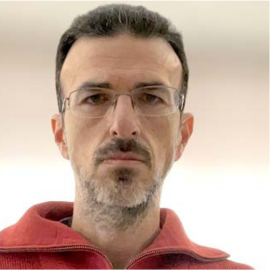
Nikos Komodakis
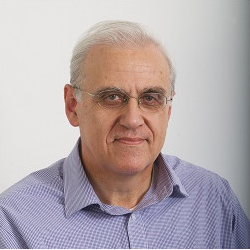
Panagiotis Kaklis
Paris Giampouras
Sotirios Sabanis

Sotirios Tsaftaris
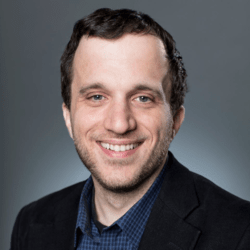
Stefanos Nikolaidis
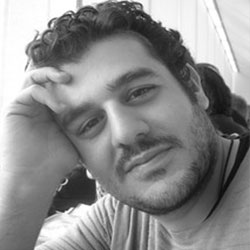
Stefanos Zafeiriou
Themos Stafylakis
Yannis Panagakis
AI for Health
Artificial Intelligence has become pivotal for research and innovation in health care. An increasing number of algorithms find their way to clinical practice providing powerful solutions and assisting medical doctors in their everyday practice. We study deep-learning-based approaches in this domain and work towards novel, unbiased, and generalizable algorithms for cancer treatment and response to immunotherapy. Of particular interest are learning schemes for training on gigapixel histopathological slides, transformer-based architectures with different attention schemes for the fusion of histopathology and genetic/clinical information, and bias identification and domain adaptation methods based on the image-to-image translation and adversarial attacks for addressing domain shifts and possibly biological and clinical biases.